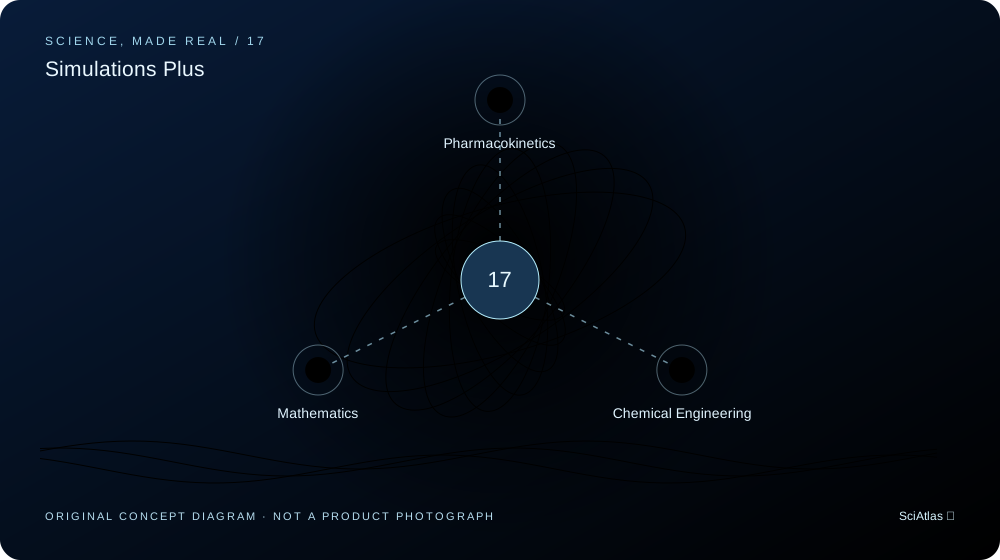
GastroPlus physiological pharmacokinetic simulation Illustration of the interdisciplinary principle of
software for absorption and physiological pharmacokinetic modeling, connecting drug properties, formulations and physiological processes.
What science makes it possible The
Mass conservation and differential equations for tissue absorption, distribution and clearance processes; extrapolation of in vitro parameters to in vivo requires assumptions, calibration and external data verification.
Understanding the product requires putting a single formula back into the system: input measurements, materials and boundary conditions are calculated by the model and then compared with actual data. Approximations at different scales cannot be unconditionally spliced, and relevant tools will indicate applicable conditions respectively.
Commercial applications and engineering boundaries
development team can compare the effects of formulation, dosing, and physiological factors on exposure. The single-room and simple clearing models on this site are just conceptual concepts and do not constitute a complete PBPK.
is an independent technical interpretation based on the manufacturer's public information and does not represent the manufacturer's adoption, endorsement or sponsorship of SciAtlas. The illustrations are original illustrations of the principles of this site, not photos of the actual products. Product specifications, certifications and availability are subject to the manufacturer's current information; the relevant tools only demonstrate public simplified models.
Manufacturer’s products and official information ↗Use online tools to understand related issues
Absolute Bioavailability
has linear pharmacokinetics, the same clearance rate, and consistent AUC coverage; the error may exceed 1.
Well Stirred Liver Model
Good mixing, perfusion-limited, linear intrinsic clearance; does not contain transport saturation.
Unbound Concentration
binding fraction is approximately constant over the concentration range studied.
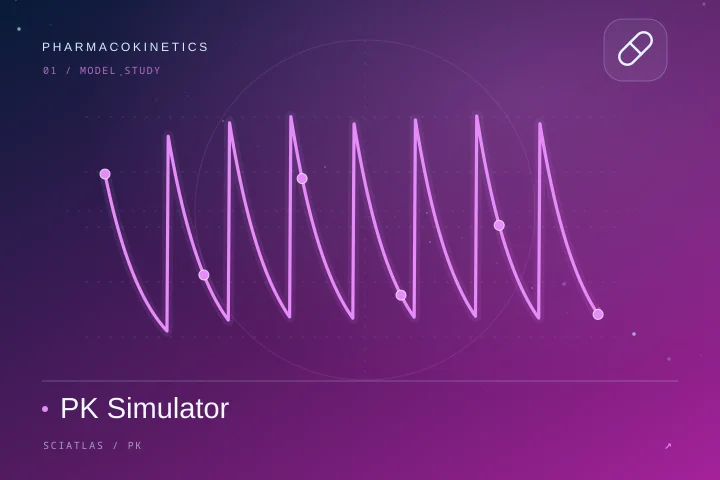
PK Simulator
linear one/two-compartment model supports bolus injection, constant-rate infusion, and first-level oral absorption; for research and teaching purposes. Steady-state peak-trough single-compartment bolus provides analytical results.
linked model is used for independent learning and magnitude analysis and does not copy the manufacturer's proprietary software or pass product performance certification.
People and historical contributions behind the science
The following relationships distinguish theoretical and method pioneers and industry leaders; it does not mean that these figures independently invented the product on this page.
worked with Maud Menten to establish classical enzyme kinetic relationships, influencing biochemical and pharmacokinetic saturation analyses.
Maud MentenMaud Menten, a biochemistry and medical researcher, worked with Michaelis to study the relationship between enzyme catalytic rate and substrate concentration.
Related Elements and Materials Basics
elemental portal is for understanding related materials or molecular basis and does not claim a complete materials list for a specific model.