Structural Biology
From questions to insights, 30online scientific tool. No registration required, free calculation and export.
Plasmid Mapper
generates circular maps and restriction site tables from sequence or annotation files.
FASTA/GenBank; built-in commonly used restriction enzymes and supports custom recognition sequences. Functional annotations were obtained from GenBank and promoters were not automatically inferred.
RNA Folding
Calculate minimum free energy structures and view base pairing probabilities.
ViennaRNA nearest neighbor thermodynamic model; up to 300 nt, does not include pseudoknots; MFE structure is not the only true conformation.
Protein Structure
View structures, annotate residues, and perform Cα rigid body overlays.
PDB/mmCIF first model; alignment requires equal length according to Cα order, no sequence alignment is performed. The pockets are user-given residues and no binding sites are predicted.
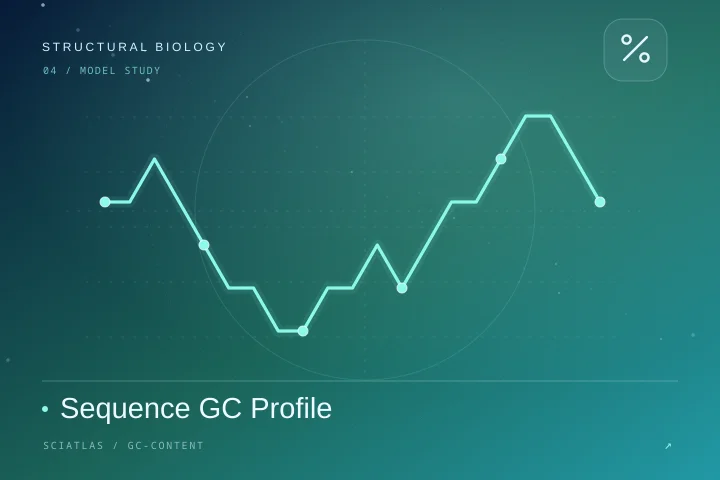
Sequence GC Profile
counts base composition and plots local GC content.
only accepts A/C/G/T, no ambiguous bases; the sliding window does not loop across the ends.
DNA Translation
translates the standard genetic code in the specified forward reading frame.
uses the standard genetic code table and does not automatically search for ORFs; incomplete codons at the tail end are omitted.
Reverse Complement
generates DNA reverse complements and corresponding RNA transcript sequences.
accepts A/C/G/T; only deterministic sequence conversions are performed. The
Pairwise Alignment
performs a global affine gap alignment of two short DNA sequences.
Maximum 1000 bp each; only the first best alignment is taken; not a database search.
Protein Properties
calculates amino acid composition, molecular weight, theoretical isoelectric point and average hydrophobicity.
standard 20 amino acids; unmodified linear chain, no prosthetic groups and post-translational modifications.
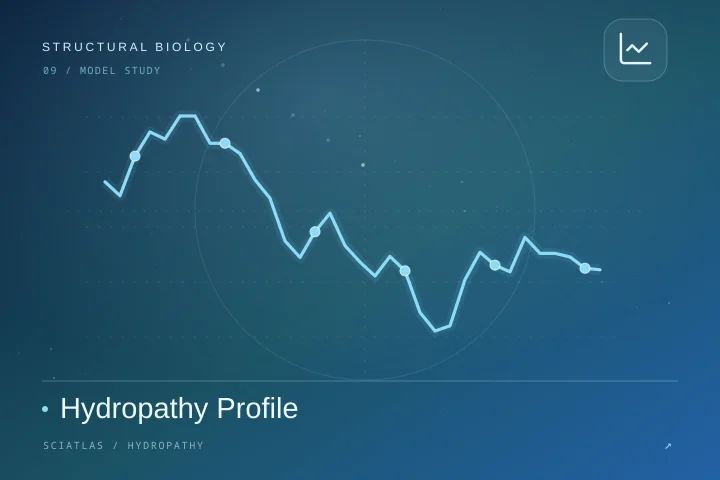
Hydropathy Profile
Plots Kyte–Doolittle local hydrophobicity changes.
equal-weighted sliding window does not directly determine the transmembrane region or folding structure.
Oligonucleotide Mass
calculates the molecular weight of unmodified single-stranded DNA and mass/mole conversion.
Standard average atomic mass; Biopython default terminal chemistry assumptions; modified chains do not apply.
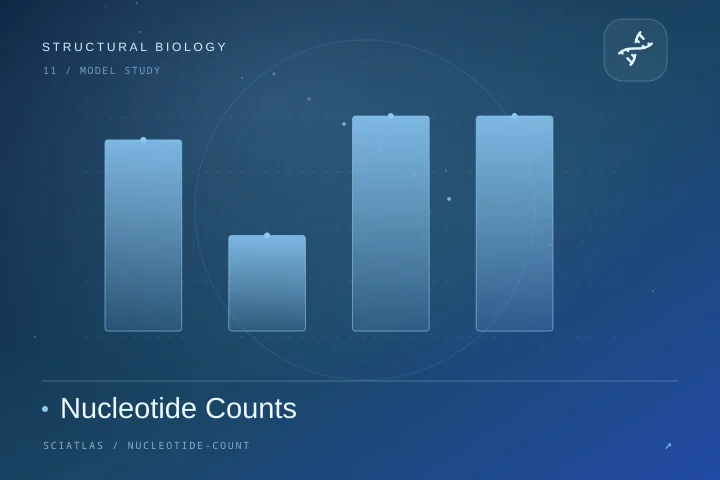
Nucleotide Counts
counts the absolute number of A/C/G/T.
Standard DNA letters, up to 20000 nt.
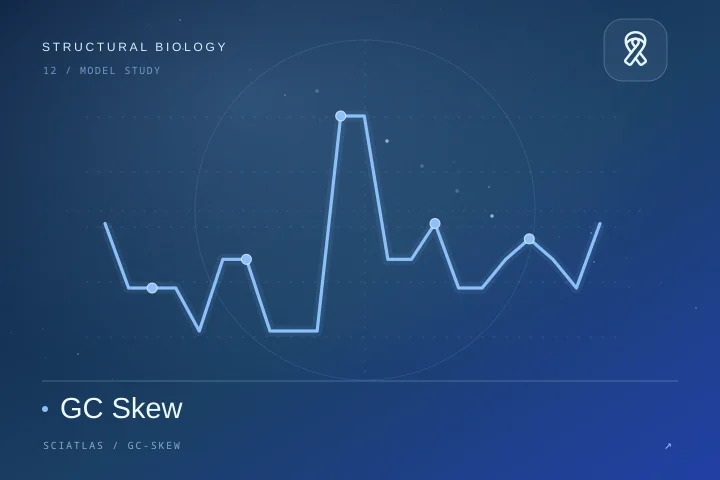
GC Skew
computes the local change of (G−C)/(G+C).
Statistical significance is not considered.
DNA Composition Entropy
Calculates single-letter Shannon entropy using base frequencies.
ignores positional dependence and does not equal sequence compressibility.
DNA k-mer Counter
counts the number of occurrences of overlapping short segments.
k≤3, up to 64 categories, reverse complementation is not incorporated.
Sequence Hamming Distance
counts bit-by-bit mismatches without gap alignment. The
requires consistent length and is not used for indel comparisons.
Exact DNA Motif Search
locates all forward exact matches for a given short sequence.
does not support degenerate letters and does not predict biological functions.
Homopolymer Runs
finds the longest continuous repeat length of each base.
only provides sequence statistics and does not evaluate sequencing platform-specific error rates.
CpG Observed Expected
Compares CpG times to independent base model expectations.
Composition correction index assuming base independence.
Wallace Oligo Tm
Calculate the empirical melting point of 2(A+T)+4(G+C).
8–30 nt, rough screening and not recommended for experimental conditions.
Nearest Neighbor DNA Tm
estimates double-chain melting points by combining monovalent salt and chain concentration.
8–200 nt Fully complementary; does not count mismatches, hairpins, or specificity.
Phred Error Probability
Convert Phred scores into predicted base error probabilities.
probability interpretation is calibrated according to the sequencing software.

Sequencing Coverage
estimates nominal depth of coverage and ideal probability of non-coverage.
Uniform independent short read length ideal coverage.
Assembly N50 L50
Calculates continuity index based on assembled fragment length.
Continuity does not represent assembly accuracy or completeness.
Forward ORF Scan
locates the complete starting and ending forward reading frame under the standard genetic code.
Teaching sequence structure check, does not judge expression or function.
Codon Frequency
counts 64 codons in the fixed forward reading frame.
is statistics only and does not optimize sequences or infer expression.
Protein Charge Titration
Calculates the theoretical net charge of an unmodified protein as a function of pH.
Standard amino acid linear unmodified chain.
Protein Extinction
estimates extinction coefficients based on aromatic residues and disulfide bond states.
does not contain prosthetic group absorption and turbidity scattering.
Protein Aromaticity
counts the composition of phenylalanine, tryptophan and tyrosine.
composition indicators cannot replace folding stability experiments.
Protein Instability Index
Estimation of empirical instability index from dipeptide composition.
Empirical sequence index, non-kinetic folding prediction.
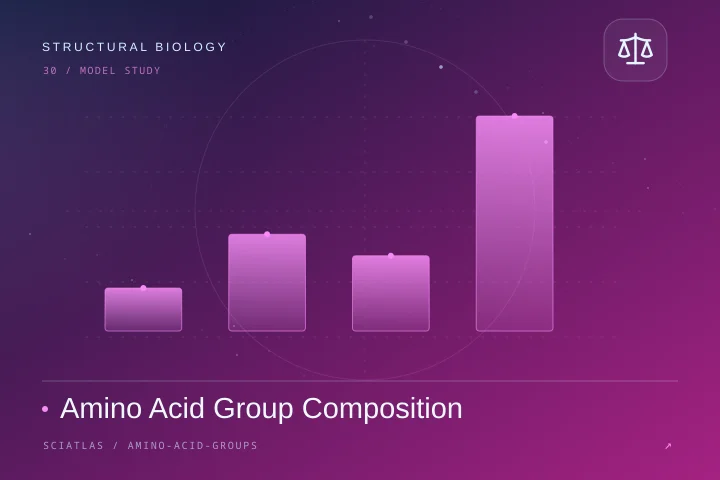
Amino Acid Group Composition
Statistical ratio by acidic, basic, aromatic and other residues.
is grouped by residue type and does not equal the actual net charge.
Understand the method and then start calculating
Tools in this field provide runnable examples, model conditions and method descriptions. Please select a model that meets the experimental conditions and retain parameter and version information.
Connect knowledge with each other
Related disciplines and tools In the initial calculation of
Biochemistry ↗sequence, structure and molecular function
Microbiology ↗microbial sequence and community analysis
Mathematics ↗sequencing errors and statistical analysis