Pharmacokinetics
From questions to insights, 30online scientific tool. No registration required, free calculation and export.
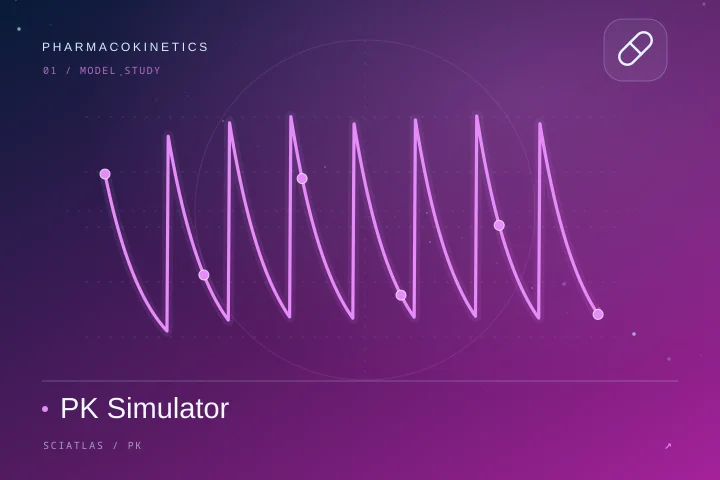
PK Simulator
interactively explores the effects of dose, clearance, and dosing intervals on exposure.
linear one/two-compartment model supports bolus injection, constant-rate infusion, and first-level oral absorption; for research and teaching purposes. Steady-state peak-trough single-compartment bolus provides analytical results.
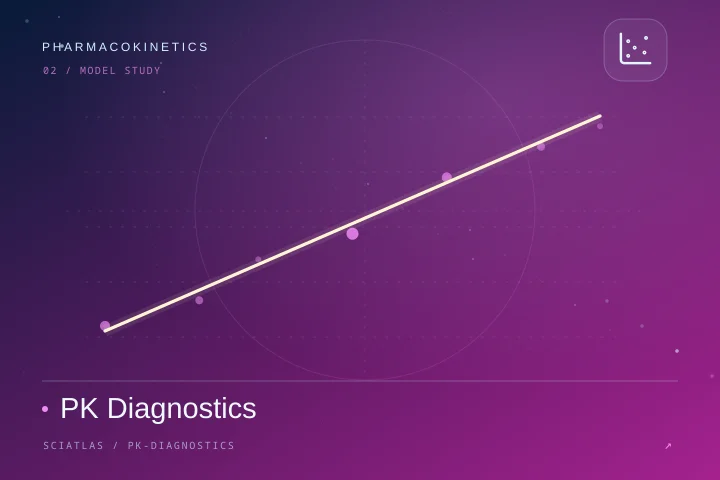
PK Diagnostics
View observations, predictions, residuals and simulated prediction intervals in one place.
supports CSV and whitespace-delimited NONMEM TABLE; column names are preserved. Do not label raw residuals as WRES. VPC needs to provide TIME, SIM, and DV simulation tables.
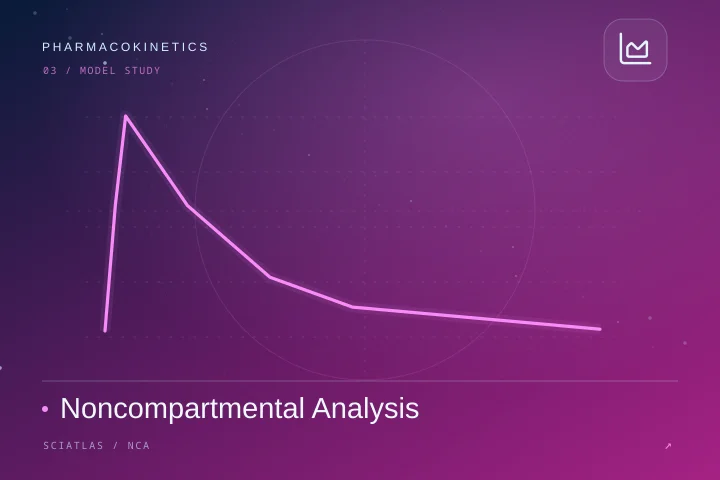
Noncompartmental Analysis
calculates AUC, peak and terminal phase metrics from concentration time series.
Linear or linear ascending/logarithmic descending trapezoidal method; the final phase uses the last N positive concentration points specified by the user. Reports extrapolation ratios and does not automatically claim terminal phase reliability.
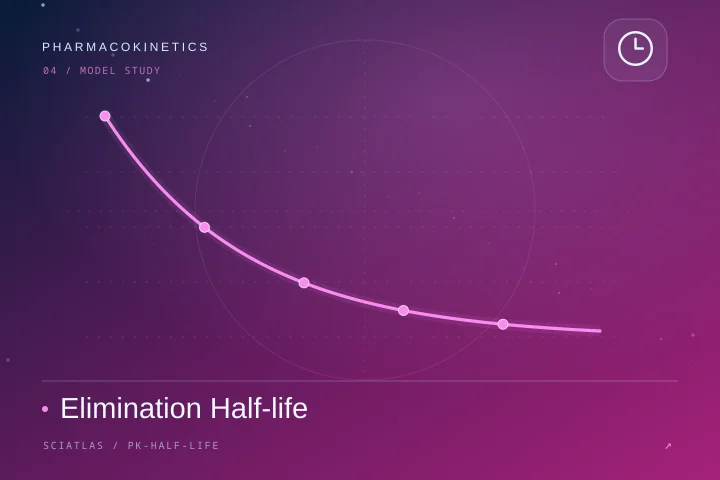
Elimination Half-life
correlates one-compartment model CL, V, elimination rate and half-life.
Linear one-compartment one-level elimination; does not represent individual clinical dosing recommendations.

Absolute Bioavailability
Comparing extravascular versus intravenous exposure from dose-normalized AUC.
has linear pharmacokinetics, the same clearance rate, and consistent AUC coverage; the error may exceed 1.
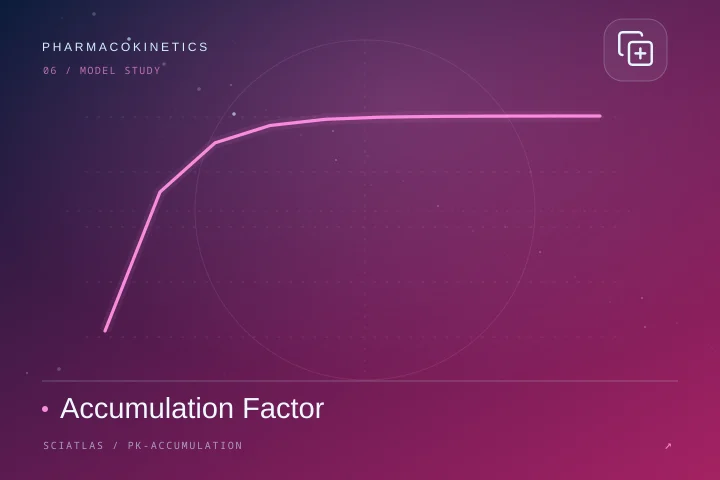
Accumulation Factor
calculates the linear accumulation and steady-state progression of equally spaced instantaneous dosing.
One room, fixed interval, first-level elimination, linear superposition.
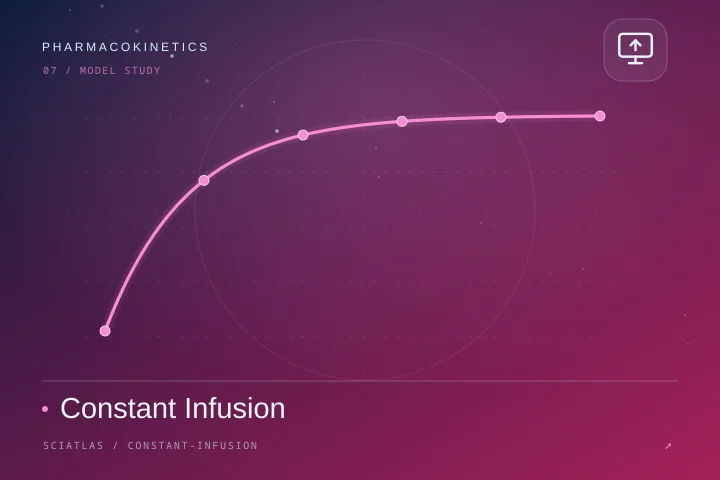
Constant Infusion
simulates chamber concentration approaching steady state at a constant infusion rate.
Linear one-chamber, initial drug-free, constant infusion; R&D demonstration.
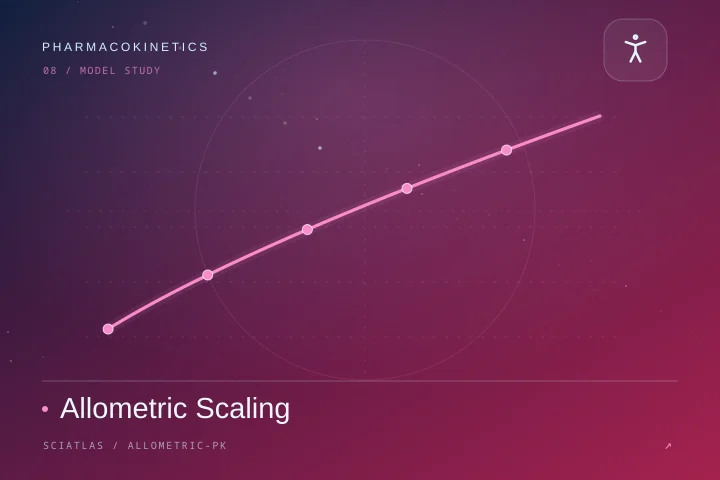
Allometric Scaling
scales reference clearance and volume of distribution by body weight with a specified index.
Empirical weight scaling without maturity, organ function, species differences or clinical validation.
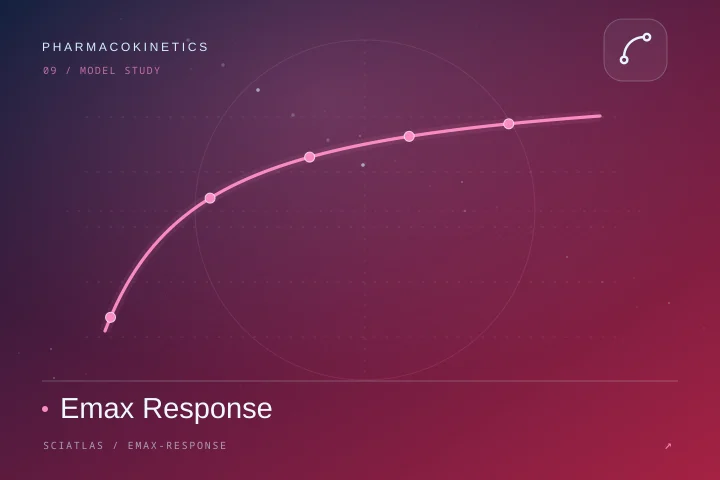
Emax Response
Compares the impact of Hill coefficient and EC50 on concentration effect curves.
Direct action empirical model without time lag, tolerance or coadministration.
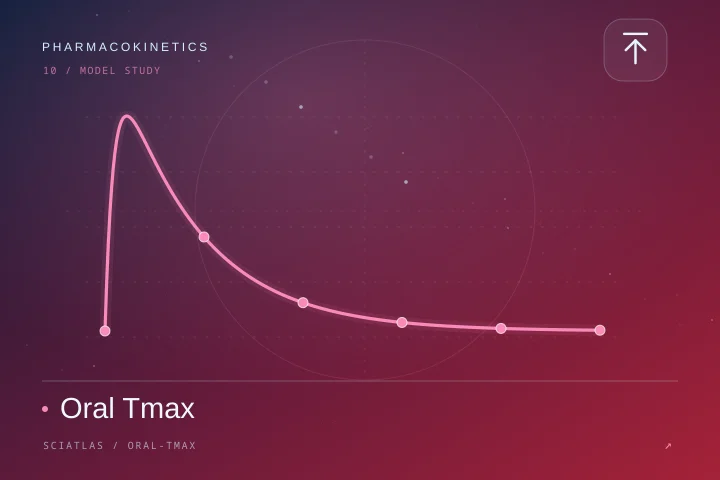
Oral Tmax
Calculate the peak time and normalized concentration of a single oral administration one-compartment model.
First-level absorption and elimination, no absorption lag, normalized unit F·Dose/V.
PK Loading Dose
Dload=Ctarget V/F: Calculate the PK load relationship based on the input, and provide local sensitivity curves and data export.
Model relationship for linear single-compartment instantaneous distribution, for research purposes only and not an individual dosing recommendation.
Maintenance Dose Relation
D=Cavg CL τ/F: Calculate the steady-state maintenance dose relationship based on the input, and provide local sensitivity curves and data export.
Linear steady-state average exposure; no clinical goals or individual regimens specified.
Steady State Average Concentration
Cavg=FD/(CLτ): Calculate the steady-state average concentration based on the input, and provide local sensitivity curves and data export.
Linear time-invariant steady-state PK, does not represent peak and trough concentrations.
Dose AUC Relation
AUC=FD/CL: Calculate linear dose exposure relationship based on input, provide local sensitivity curve and data export.
Linear model for total AUC₀∞ without accounting for time-dependent clearance.
Elimination Rate Constant
k=CL/V: Calculate the clearance rate to elimination constant based on the input, and provide local sensitivity curves and data export.
Linear single-compartment, not equal to the general formula for multi-compartment terminal slope.
IV Initial Concentration
C₀=D/V: Calculate the initial concentration of intravenous bolus injection based on the input, and provide local sensitivity curves and data export.
Instantaneous bolus injection and complete mixing assumptions cannot describe the instantaneous concentration at the injection site.
IV Bolus Decay
C(t)=D/V exp(−CLt/V): Calculate the concentration time course of a single bolus injection based on the input, and provide local sensitivity curves and data export.
Linear single chamber, immediate post-bolus mixing.
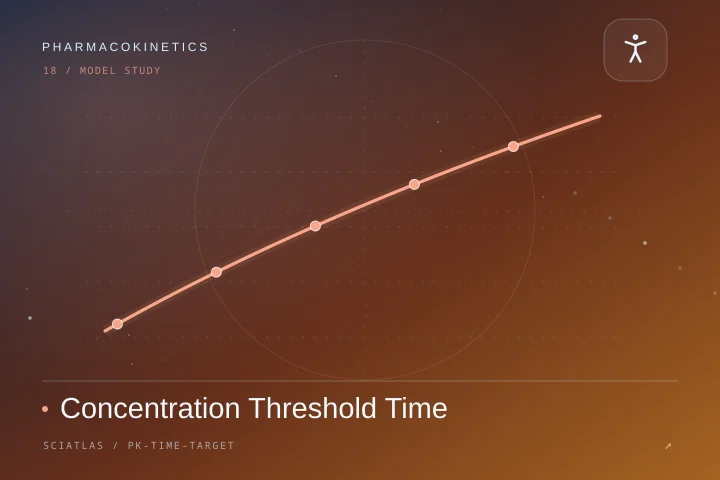
Concentration Threshold Time
t=ln(C₀/Ctarget)/k: Calculate the time when the concentration drops to the threshold based on the input, and provide local sensitivity curves and data export.
has a single exponential decay and the threshold is not higher than the initial value; the threshold is set by user research.
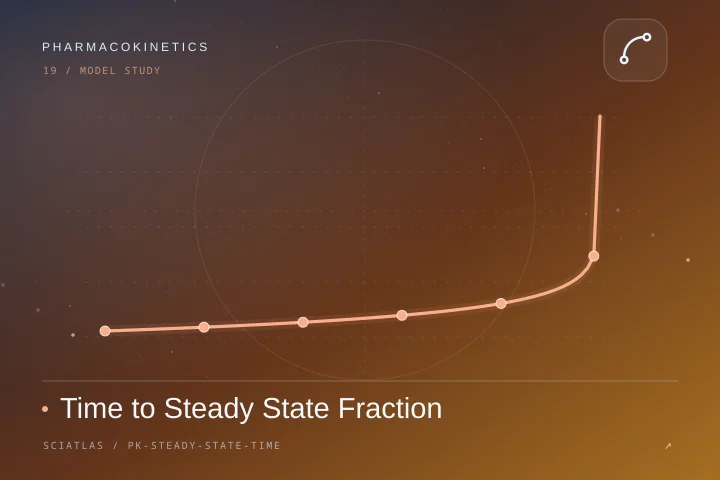
Time to Steady State Fraction
t=−ln(1−f)/k: Calculate the time required to reach the steady state ratio based on the input, and provide local sensitivity curves and data export.
Constant rate infusion or linear cumulative envelope approximation, not equal to instantaneous peak to valley ratio.
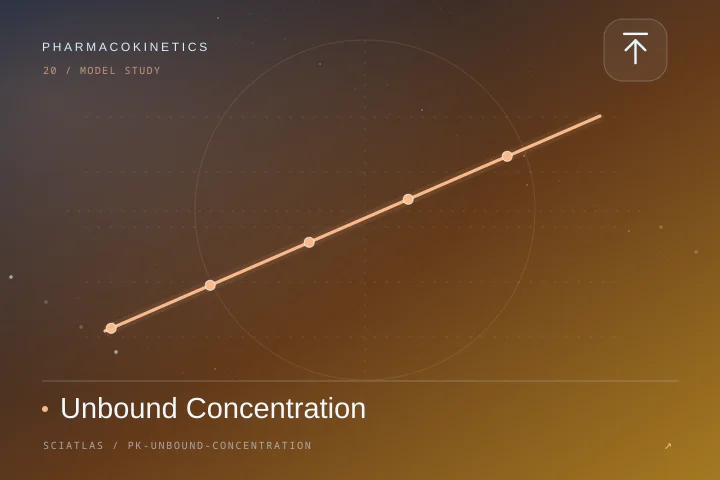
Unbound Concentration
Cu=fu Ctotal: Calculate free blood drug concentration based on input, provide local sensitivity curve and data export.
binding fraction is approximately constant over the concentration range studied.
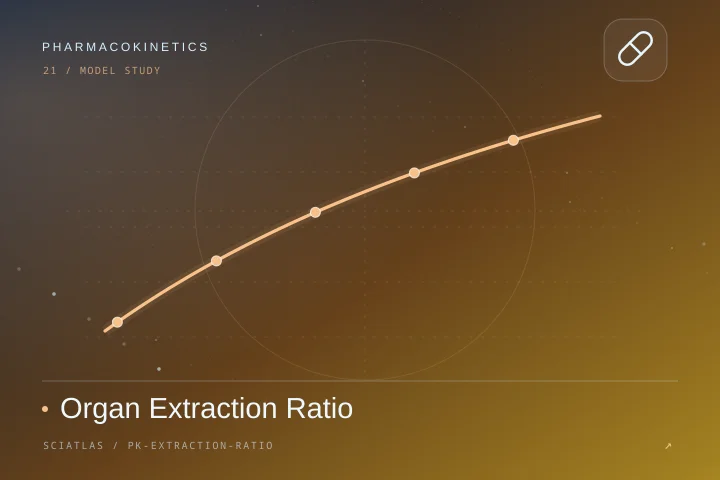
Organ Extraction Ratio
E=(Cin−Cout)/Cin: Calculate the organ extraction rate based on the input, and provide local sensitivity curves and data export.
does not generate drugs in organs at steady state, and the flow and concentration standards are consistent.
Flow Extraction Clearance
CL=Q E: Calculate organ blood flow clearance rate based on input, provide local sensitivity curve and data export.
uses organ clearance defined by whole blood concentration and does not directly mix plasma clearance.
Well Stirred Liver Model
CLh=Q fu CLint/(Q+fu CLint): Calculate liver good stirring model based on input, provide local sensitivity curve and data export.
Good mixing, perfusion-limited, linear intrinsic clearance; does not contain transport saturation.
Glomerular Filtration Clearance
CLf=fu GFR: Calculates glomerular filtration clearance based on input, provides local sensitivity curves and data export.
only contributes to filtration and does not include secretion, reabsorption and renal metabolism.
Mean Residence Time
MRT=AUMC/AUC: Calculate AUMC and average residence time based on input, provide local sensitivity curve and data export.
The two areas need to be in the same time interval and consistent extrapolation, and the oral value includes absorption contribution.
Steady State Volume
Vss=CL·MRT: Calculate the steady-state distribution volume based on the input, and provide local sensitivity curves and data export.
IV bolus or MRT minus infusion duration contribution.
AUC Extrapolated Fraction
fext=(Clast/λz)/(AUCobs+Clast/λz): Calculate the AUC extrapolation ratio based on the input, and provide local sensitivity curves and data export.
is suitable for single exponential extrapolation, and λz needs to be estimated independently and reliably.
Steady State Trough Peak Ratio
Cmin/Cmax=exp(−kτ): Calculate the bolus steady-state valley-to-peak ratio based on the input, and provide local sensitivity curves and data export.
Linear unicompartmental repeated intravenous bolus injection.
Post Infusion Decay
C=Cstop exp(−kt): Calculate the concentration after stopping the infusion based on the input, and provide local sensitivity curves and data export.
Single compartment linear elimination, does not include distribution phase.
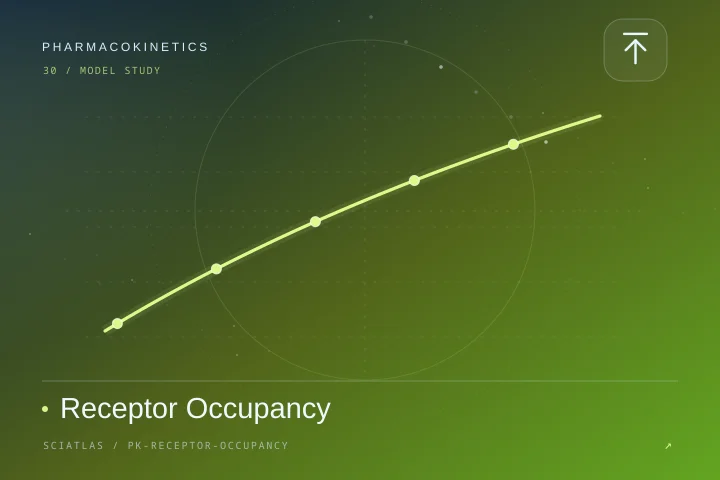
Receptor Occupancy
θ=C/(Kd+C): Calculate receptor occupancy based on input, provide local sensitivity curves and data export.
is a single type of independent site balanced combination, which is not equivalent to clinical efficacy.
Understand the method and then start calculating
Tools in this field provide runnable examples, model conditions and method descriptions. Please select a model that meets the experimental conditions and retain parameter and version information.
Connect knowledge with each other
Related disciplines and tools In the initial calculation of
Biochemistry ↗enzyme reaction, binding and clearance
Chemical Engineering ↗conservation and dynamics model
Mathematics ↗Parameter estimation and study design