Alfa Laval plate heat exchanger Interdisciplinary principle illustration of
is an industrial equipment system that achieves efficient heat exchange through plate channels, covering multiple process applications.
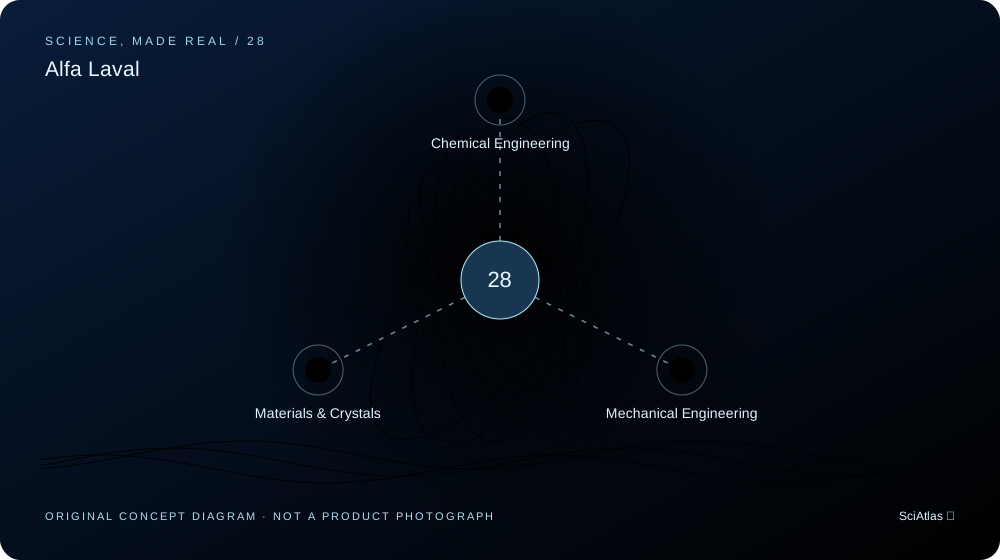
What science makes it possible The
The temperature difference drives the heat flow, and the flow resistance and heat transfer coefficient change with the channel structure and physical properties; dirt, material compatibility and thermal stress jointly constrain the design.
Understanding the product requires putting a single formula back into the system: input measurements, materials and boundary conditions are calculated by the model and then compared with actual data. Approximations at different scales cannot be unconditionally spliced, and relevant tools will indicate applicable conditions respectively.
Commercial applications and engineering boundaries
Food, chemical and energy process teams select based on load, pressure drop and cleaning requirements. The LMTD and NTU on this site are preliminary calculation models and cannot replace the manufacturer's selection.
is an independent technical interpretation based on the manufacturer's public information and does not represent the manufacturer's adoption, endorsement or sponsorship of SciAtlas. The illustrations are original illustrations of the principles of this site, not photos of the actual products. Product specifications, certifications and availability are subject to the manufacturer's current information; the relevant tools only demonstrate public simplified models.
Manufacturer’s products and official information ↗Use online tools to understand related issues
Log Mean Temperature Difference
Steady counterflow, constant U; does not include complex flow pattern correction coefficients.
Heat Transfer Area
The ideal counterflow correction coefficient is one; the actual design requires dirt and structural corrections.

Counterflow Effectiveness
Ideal countercurrent, constant physical properties, no heat loss; Cr=1 uses the continuous limit.
Constrained Thermal Stress
One-dimensional fully constrained, compressive stress is generated by heating; plasticity and temperature-dependent modulus are ignored.
linked model is used for independent learning and magnitude analysis and does not copy the manufacturer's proprietary software or pass product performance certification.
People and historical contributions behind the science
The following relationships distinguish theoretical and method pioneers and industry leaders; it does not mean that these figures independently invented the product on this page.
Related Elements and Materials Basics
elemental portal is for understanding related materials or molecular basis and does not claim a complete materials list for a specific model.