SpaceX Falcon 9 reusable launch vehicle
is a two-stage launch vehicle that provides orbital launch services. The recovery and reuse of the first stage is an important engineering feature.
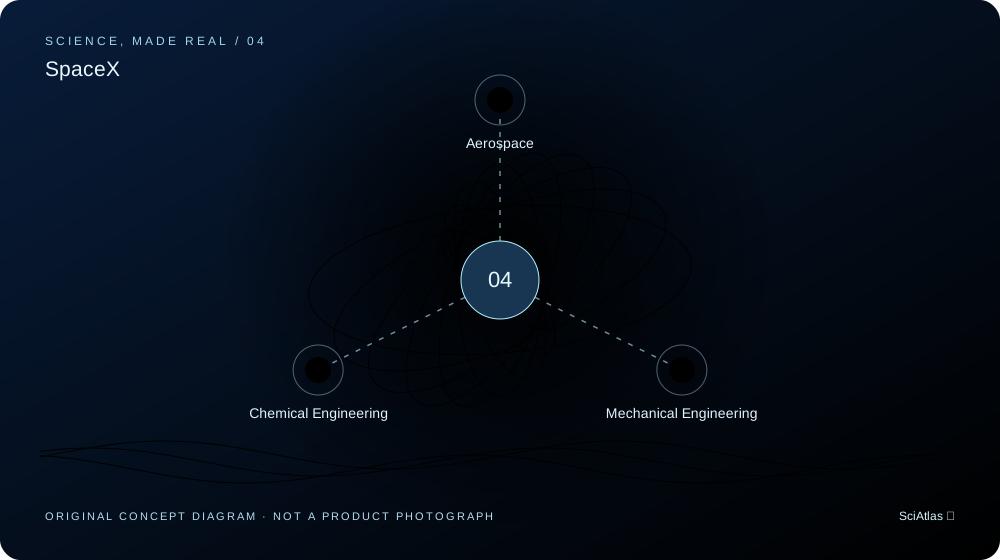
What science makes it possible The
propellant mass ratio controls the ideal speed increment, and gravity and drag losses need to be deducted for actual flight; structural quality, aerodynamic load, engine performance and guidance closed loop jointly determine mission capabilities.
Understanding the product requires putting a single formula back into the system: input measurements, materials and boundary conditions are calculated by the model and then compared with actual data. Approximations at different scales cannot be unconditionally spliced, and relevant tools will indicate applicable conditions respectively.
Commercial applications and engineering boundaries
satellite operator purchases launch services, and the engineering team carries out the overall design through orbit requirements, payload interfaces and mission constraints. The rocket model on this site is a simplified tutorial.
is an independent technical interpretation based on the manufacturer's public information and does not represent the manufacturer's adoption, endorsement or sponsorship of SciAtlas. The illustrations are original illustrations of the principles of this site, not photos of the actual products. Product specifications, certifications and availability are subject to the manufacturer's current information; the relevant tools only demonstrate public simplified models.
Manufacturer’s products and official information ↗Use online tools to understand related issues
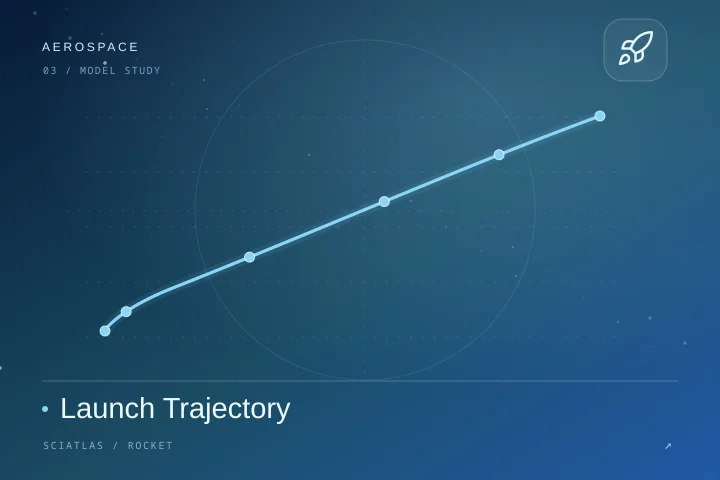
Launch Trajectory
Two-dimensional spherical earth model, exponential atmosphere, fixed drag coefficient; turns according to given pitch program. Attitude control, wind and lift are not modeled.
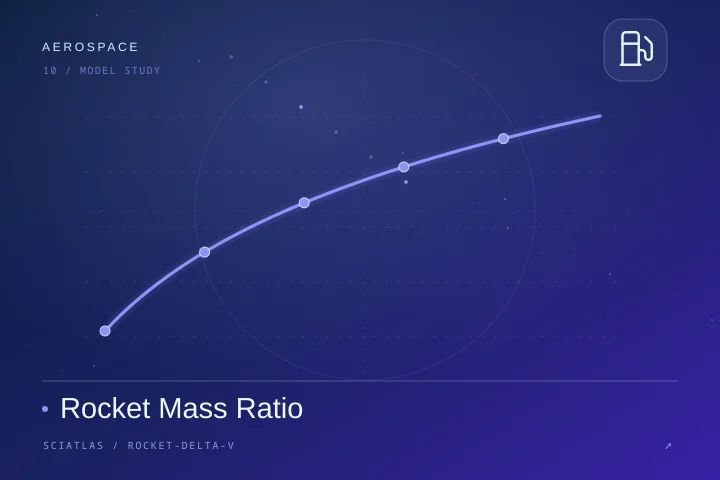
Rocket Mass Ratio
Constant specific impulse, no gravity and resistance loss.
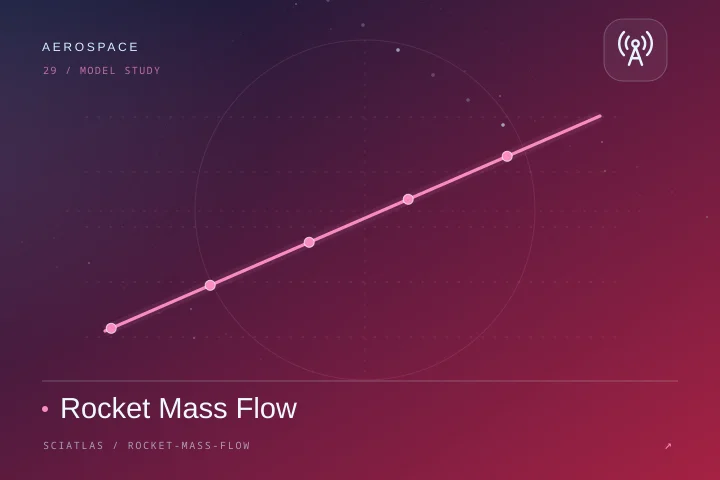
Rocket Mass Flow
The given effective specific impulse includes the influence of the nozzle pressure in the environment.
Flight Dynamic Pressure
The definition of local flow field dynamic pressure is not equal to the pressure increment of the compressible flow stagnation point.
linked model is used for independent learning and magnitude analysis and does not copy the manufacturer's proprietary software or pass product performance certification.
People and historical contributions behind the science
The following relationships distinguish theoretical and method pioneers and industry leaders; it does not mean that these figures independently invented the product on this page.
systematically studies rocket motion and aerospace propulsion. The relationship between rocket mass ratio and velocity increment is an important theoretical legacy.
Isaac NewtonIsaac NewtonImportant founder of classical mechanics and the theory of gravity; these theories form the basis for modeling orbital and mechanical systems.
Elon MuskElon MuskFounder of SpaceX, participates in the company's commercial and technical leadership; specific products are jointly developed by a multi-professional team.
Related Elements and Materials Basics
elemental portal is for understanding related materials or molecular basis and does not claim a complete materials list for a specific model.